From Internal Tool to $1M+ SaaS Product
VMware Learning Platform (VLP) was a powerful but aging internal tool. It lacked a cohesive UX, modern architecture, and commercial positioning.
This is the story of how I helped reshape it into a SaaS offering - by earning trust, embedding design, and transforming the experience, one module at a time.

- Me → hired 1 Designer
- 14 Engineers, 1 PM
- 2 Solution Architects
- Market Research
- User Research
- Product Transformation
- Cross-functional Leadership
Product Overview
VMware Learning Platform (VLP) is a cloud-based lab environment that delivers in-browser hands-on IT training, demos, and sandbox experiences.
Challenge
Transform a 20-year-old internal tool into a commercial SaaS product while maintaining the trust of an engineering-first team skeptical of design changes.
Constraints
Engineering-led culture, no existing design processes, and established user workflows that couldn't be disrupted.
Success Metrics
- $1M+ ARR achievement
- 30+ enterprise customers
- Design team establishment
Design Impact
- Complete platform redesign and modernization
- Unified user experience across all modules
- Established design culture in engineering-first team
- Created scalable design system and processes
An Engineering-First Team with a 20-Year-Old Internal Tool
In 2020, VMware had a powerful but aging internal lab platform that had served the company well for two decades. However, leadership saw commercial potential and wanted to transform it into a SaaS offering. The challenge? A brilliant engineering team that had built everything themselves and was naturally skeptical of external design input disrupting their proven workflows.
- Trust Deficit: As the first designer on the team, I needed to prove value without disrupting established engineering momentum.
- No Design Culture: Twenty years of engineering-led decisions had created inconsistent UX patterns across the platform.
- Commercial Pressure: Leadership expected rapid transformation to capture market opportunity in the cloud training space.
- Legacy Constraints: Deep technical debt and established user workflows that couldn't be changed overnight.

Building Trust First
Considering the lack of trust in design, I focused on understanding the system and market while offering design input without disrupting velocity.

Understanding the Ecosystem
I conducted comprehensive research across three key areas to understand the opportunity and constraints:
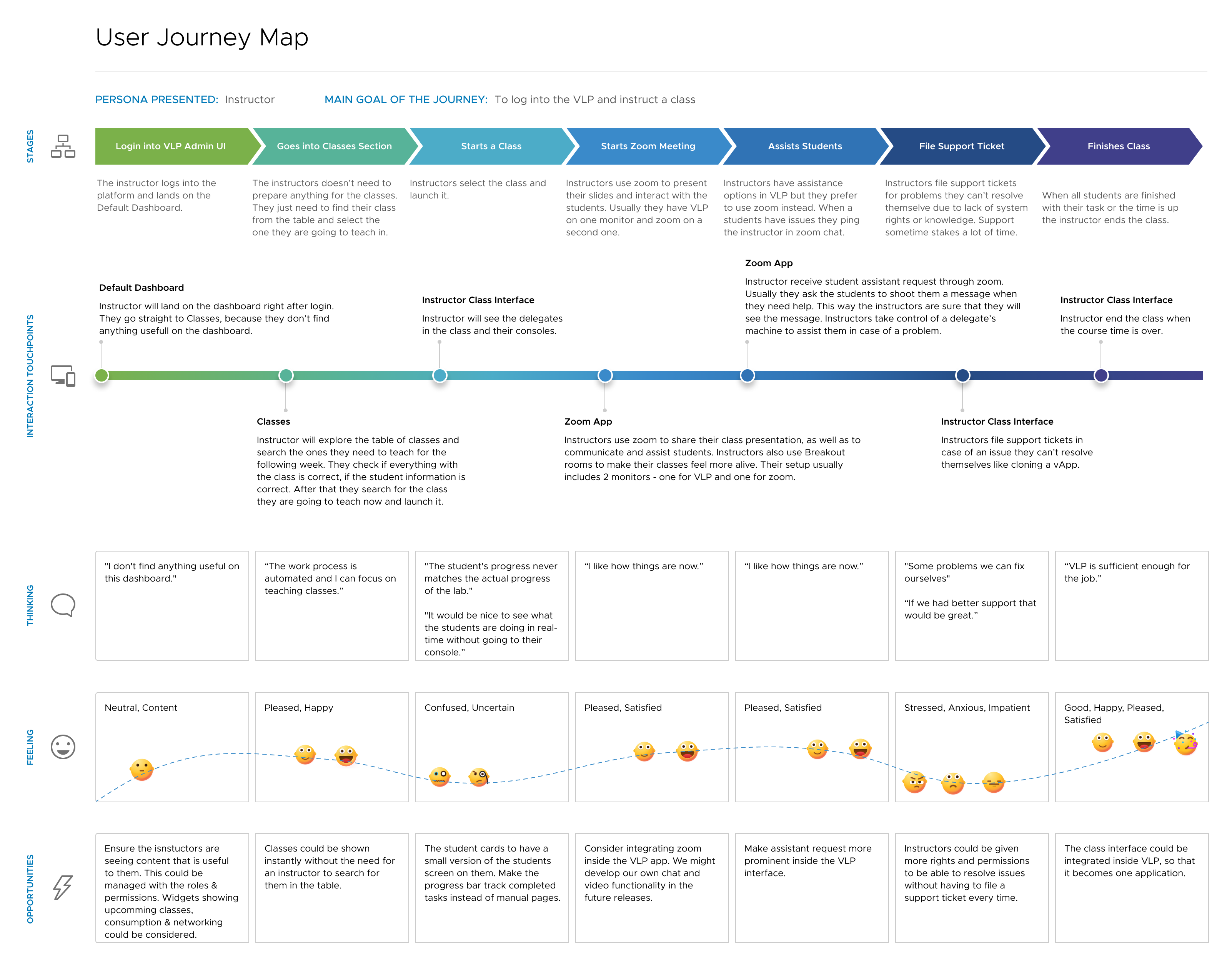
- User Research: 1:1 interviews with Solution Architects, instructors, and sales teams
- Technical Discovery: Deep dive into platform architecture and engineering processes
- Market Analysis: Competitive landscape and positioning opportunities
This research revealed that while the platform was technically robust, the user experience was fragmented and intimidating for potential commercial customers.


Showing Value Without Friction
Instead of pushing big redesigns, I suggested small design tweaks per sprint - improving consistency, usability, and legibility across modules, earning engineering trust.

POC: Design-led Innovation
I was invited to design a brand-new “Classroom Experience” module from scratch. Rather than designing it in isolation, I showed how it could fit into a more holistic, intuitive experience across the app.
VLP Lite: Designing for Commercial Success
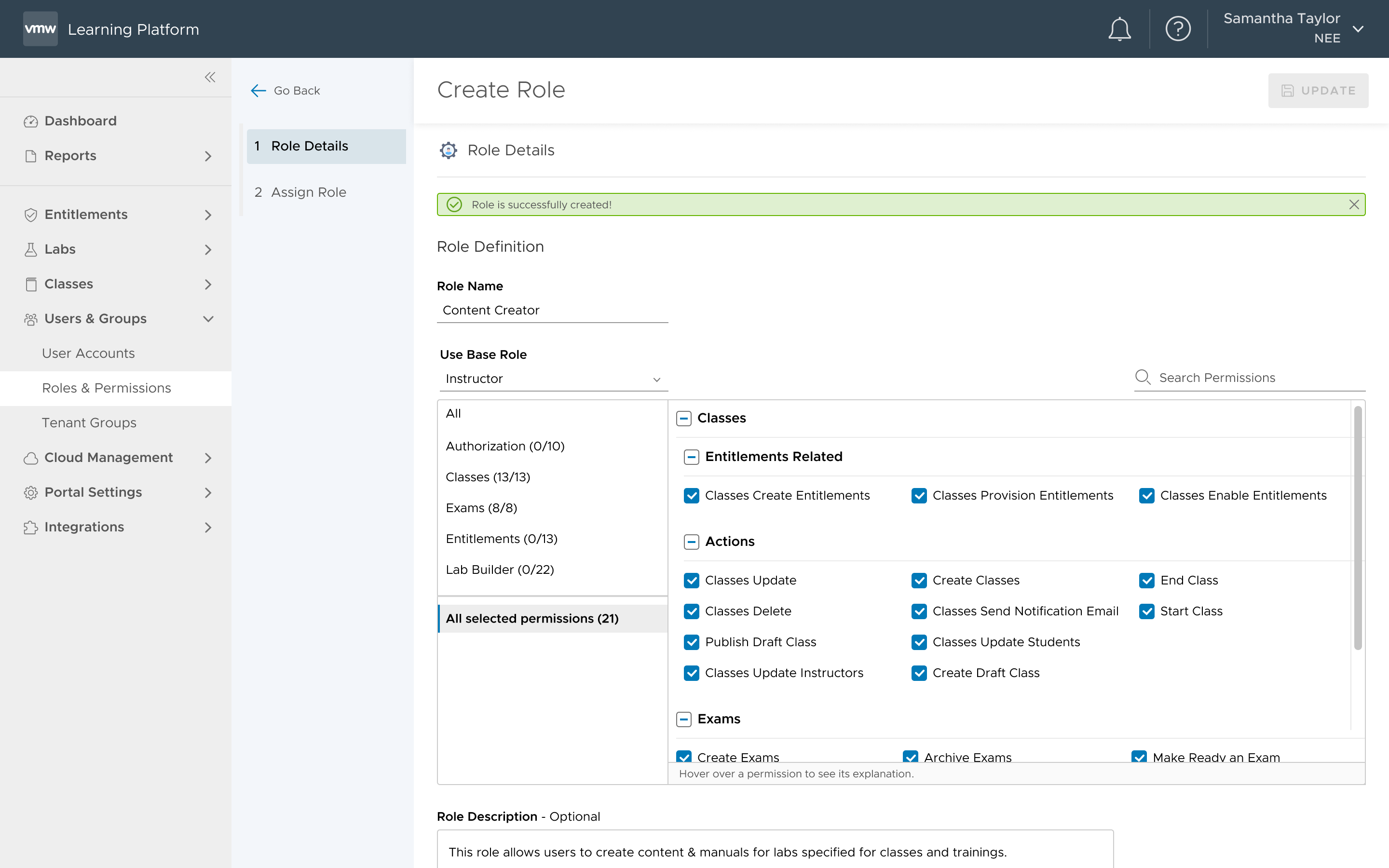
To address the commercial opportunity, I designed "VLP Lite"—a simplified version that maintained all the platform's power while being approachable for new enterprise customers.
Key Design Principles
- Progressive Disclosure: Advanced features available but not overwhelming
- Simplified Language: Technical jargon replaced with business-friendly terms
- Clear Information Architecture: Logical flows for different user types
- Professional Polish: Customer-ready interface that builds confidence
Platform Highlights

Universal Access
Any HTML5 browser, any device—no plugins or complex installations required.

Modular Architecture
Flexible interface components that adapt to different training scenarios and use cases.

Enterprise-Grade Control
Complete virtual machine control for complex enterprise training and certification scenarios.
Scaling the Design Team
As the platform gained commercial traction, I transitioned into a management role and hired a dedicated designer for VLP. Together, we delivered comprehensive redesigns of core modules:
- LabBuilder: Environment creation and management
- Event Management: Training session coordination
- Instructor Dashboard: Real-time session monitoring
- Analytics Platform: Usage insights and reporting
From Internal Tool to Commercial Success
The transformation of VLP exceeded all expectations. What started as a skeptical engineering team became enthusiastic advocates for design thinking, and what began as an internal tool became a significant revenue driver for VMware.

What This Transformation Taught Me
-
Trust Is the Foundation
In engineering-dominated environments, proving your technical understanding and respecting existing processes is essential before introducing design thinking.
-
Small Wins Build Big Momentum
Incremental improvements that show clear value are more effective than large redesigns that disrupt established workflows.
-
Commercial Success Validates Everything
When design contributes to clear business outcomes, it becomes an undisputed part of the product development process.